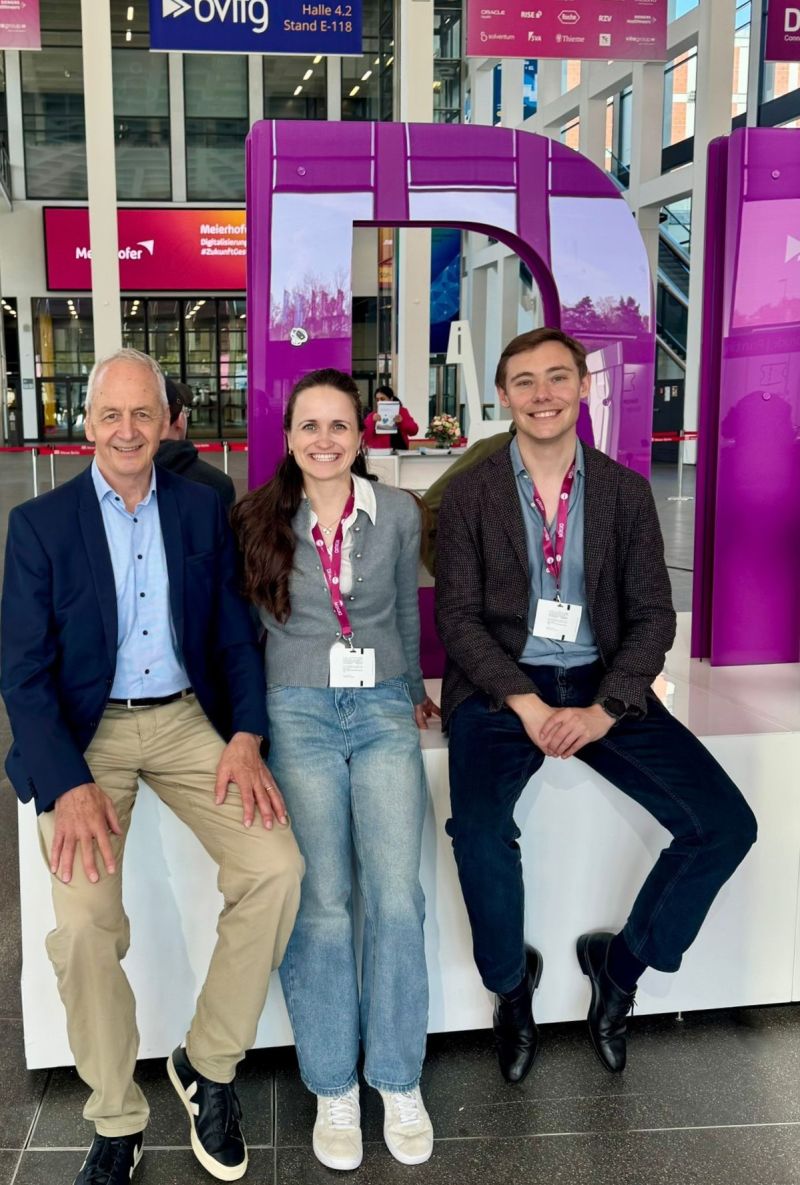
Prof. Hans-Peter Brunner-La Rocca Presents Cardio Explorer® at the ESC in Munich
Originally published on explorishealth.com
24 min · Digital Health Symposium, ESC Congress 2026, Munich
Presented at the Digital Health Symposium at ESC in Munich, highlighting the potential of multi-marker AI to improve the assessment of obstructive coronary artery disease and patient selection for further testing.
The exclusion of acute coronary syndrome does not rule out underlying coronary artery disease. Yet 70–80% of patients presenting to chest pain units are troponin-negative, leaving an important clinical question unresolved: Who is actually at risk for obstructive CAD?
The current ESC risk factor-weighted clinical likelihood assessment has significant limitations. Because it is based on a limited number of clinical parameters and is strongly influenced by symptom classification, it may underestimate risk in atypical presentations while directing many intermediate-risk patients toward CCTA.
Cardio Explorer® uses a multi-marker AI approach, combining 32 routinely available clinical parameters to capture complex, nonlinear relationships associated with obstructive CAD. In the validation study presented, the model achieved an AUC of 0.878.
Importantly, the potential value extends beyond diagnostic prediction. The presented analysis showed that Cardio Explorer® can distribute patients more selectively across diagnostic probability thresholds, potentially supporting a more targeted use of CCTA, functional testing, and invasive angiography.
The key message from ESC Munich: The next step for cardiovascular AI is not simply better prediction, but translating more individualized risk assessment into better clinical decisions and more efficient care pathways—thereby improving overall hospital economics.
Are you interested in how Cardio Explorer® applies to your coronary pathway? Our team would be happy to walk you through the platform and the evidence behind it.